← Home · Laboratory

Atterberg Limits Testing for Winnipeg Clay Soils

Together, we solve the challenges of tomorrow.

LEARN MORE →

Specifying a footing design in Winnipeg without verifying the Atterberg limits is a gamble most structural engineers learn to avoid after one bad spring thaw. The city sits on the floor of glacial Lake Agassiz, blanketed by up to 20 meters of lacustrine clay that changes volume dramatically with moisture content. A routine test pit log might identify the stratum as high-plasticity clay visually, but only the liquid limit and plastic limit numbers from ASTM D4318 testing quantify just how active that deposit really is. The difference between a CH clay with a plasticity index of 25 versus 45 determines whether you need a stiffened raft, deep piles, or can stay shallow. Every season, our lab receives remolded samples from foundation investigations across Charleswood, Transcona, and St. Vital where the Atterberg limits completely reshaped the geotechnical recommendation.

A plasticity index shift of 10 points in Winnipeg clay can double the predicted swell pressure and completely invalidate a shallow footing design.

Methodology and scope

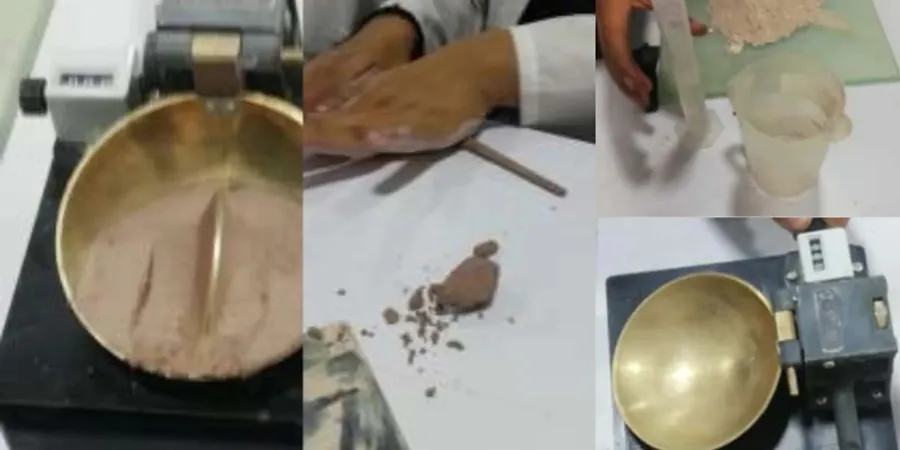
Winnipeg splits geotechnically along a north-south gradient that mirrors the old lakebed sedimentation. North of the Assiniboine River, the clays often test out with liquid limits between 50 and 80 percent and plasticity indices exceeding 30, placing them firmly in the fat clay category under the Unified Soil Classification System. Drive south into St. Norbert and the same depth horizon can yield lean clays with lower plasticity, owing to siltier deposition near the former lake margin. The Atterberg limits test captures this shift in a few repeatable numbers: the liquid limit marks where the soil behaves as a viscous fluid, the plastic limit defines the moisture content where it crumbles when rolled to a 3.2 mm thread, and the difference gives the plasticity index. Our lab runs the Casagrande cup method per ASTM D4318-17, with technician oversight on every specimen to confirm the blow count closure range. We also observe the mineral fraction—smectite-rich Winnipeg clays can hold moisture far beyond what a standard Proctor curve would predict, so pairing Atterberg limits with a Proctor test often reveals compaction targets that standard assumptions miss.
Atterberg Limits Testing for Winnipeg Clay Soils
Technical reference image — Winnipeg

Local considerations

Manitoba Building Code references and the National Building Code of Canada 2020 both require soil classification data for foundation design in expansive soil regions, which includes essentially all of Winnipeg. The Atterberg limits feed directly into the CH or CL designation that determines whether Table 9.4.4.1 of the NBCC assigns a moderate or high swell potential. Underestimating the plasticity index means the structural engineer selects an undersized footing or omits void form beneath a grade beam, and the first cycle of freeze-thaw plus summer drying triggers differential heave. For road and pavement work in the city, City of Winnipeg Standard Construction Specifications cross-reference Atterberg limits for subgrade acceptance—material with a PI above 35 often requires chemical stabilization or removal. A single misclassified sample from a backhoe pit can lead to a pavement design that ruts and cracks within two winters because the subgrade couldn't handle the suction-driven moisture migration Winnipeg's climate forces.

Need a geotechnical assessment?

Reply within 24h.

Email: contact@geotechnicalengineering.vip

Technical parameters

ParameterTypical value
Test standardASTM D4318-17
Liquid Limit (LL) range for Winnipeg clays35–80+
Plastic Limit (PL)Determined by 3.2 mm thread rolling method
Plasticity Index (PI) typical range15–50+
Sample requirement200 g passing No. 40 sieve
Soil classification outputUSCS symbol (CL, CH, ML, MH)
Turnaround standard3–4 business days
Report includesLL, PL, PI, liquidity index, USCS symbol

Associated technical services

01

Liquid Limit and Plastic Limit (ASTM D4318)

Full Casagrande cup and rolling-thread determination on remolded samples passing the No. 40 sieve, reported with plasticity index, liquidity index, and USCS symbol.

02

One-Point Liquid Limit (ASTM D4318 Method B)

Expedited liquid limit for projects where sample mass is limited or multiple specimens from the same stratum need rapid classification confirmation.

03

Atterberg Limits with Particle Size Correlation

Combined package that runs Atterberg limits and hydrometer analysis on the same sample to confirm the clay fraction and refine the USCS classification with grain-size distribution data.

Applicable standards

ASTM D4318-17 (Standard Test Methods for Liquid Limit, Plastic Limit, and Plasticity Index of Soils), ASTM D2487-17 (Practice for Classification of Soils for Engineering Purposes — Unified Soil Classification System), Manitoba Building Code / NBCC 2020 (foundation design on expansive soils)

Frequently asked questions

What do Atterberg limits tell a Winnipeg structural engineer that a basic soil log doesn't?

A field log identifies texture and color, but Atterberg limits quantify how the clay behaves with water. Winnipeg's Lake Agassiz clays can look similar in a split spoon yet have liquid limits ranging from 30 to over 80. The plastic limit and plasticity index define the moisture range where the soil remains workable and the point where volume change becomes problematic. That number drives the NBCC expansive soil classification and determines whether the engineer specifies a conventional strip footing or a pile-supported structural slab.

How much does Atterberg limits testing cost for a Winnipeg project?

A standard liquid limit and plastic limit determination on a single sample runs between CA$100 and CA$120, depending on the number of specimens and whether a hydrometer correlation is requested in the same work order.

Can Atterberg limits alone classify a Winnipeg clay for foundation design?

They provide the plasticity classification needed for USCS grouping and expansive soil screening under the Manitoba Building Code, but a complete foundation design usually requires consolidation or swell test data. Atterberg limits identify the problem clay; the swell-consolidation test quantifies the expected movement. We recommend running both when the plasticity index exceeds 25.

What sample condition do you need for reliable Atterberg limits?

About 200 grams of material passing the No. 40 sieve, preferably from a remolded or disturbed sample taken below the active zone. Oven-dried samples can alter the liquid limit of smectitic Winnipeg clays, so we prefer air-dried material and note the preparation method on the report. The 3.2 mm thread for the plastic limit requires a technician who can maintain consistent rolling pressure, which is why every specimen in our lab is hand-rolled under senior supervision.
Location and service area

We serve projects across Winnipeg and its metropolitan area.

View larger map