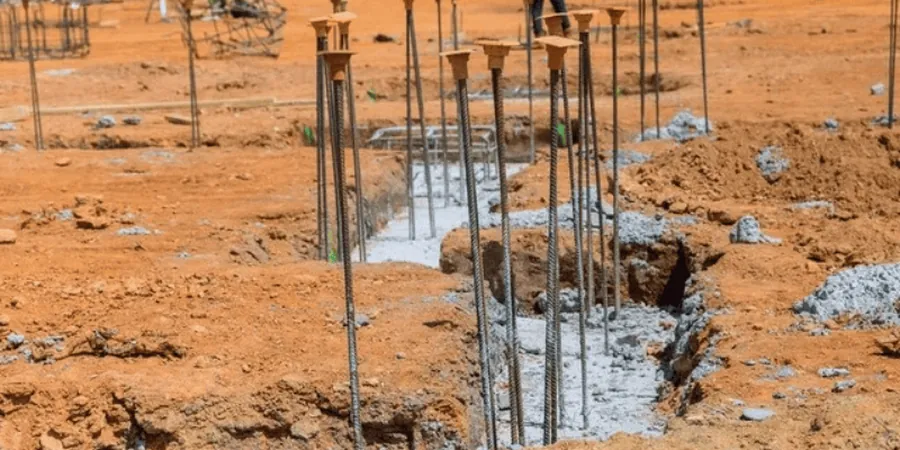
Driving piles in River Heights is nothing like working the industrial lots off Inkster Boulevard. One site hits stiff glacial till at 15 meters; another punches through 20 meters of plastic Lake Agassiz clay before finding anything competent. The difference comes down to pore pressure dissipation rates and the sensitivity of the local lacustrine deposits. Our lab runs consolidation and triaxial tests on Shelby tube samples pulled from each borehole, then feeds those parameters into the capacity models. The output is a pile length and section that works for that specific Winnipeg address, not a generic design copied from another province. When friction angles are low, we often pair the pile investigation with CPT testing to get a continuous tip resistance profile without gaps between samples.
A pile in Winnipeg clay works in drained conditions long-term; design for the effective stress parameters or you will be restressing anchors in five years.
Applicable standards
NBCC 2020 (National Building Code of Canada, Division B, Part 4), CSA A23.3:19 (Design of Concrete Structures, Annex for deep foundations), CFEM 2006 (Canadian Foundation Engineering Manual, Chapters 18 & 24), ASTM D1143/D1143M-20 (Standard Test Methods for Deep Foundation Elements Under Static Axial Compressive Load), ASTM D4945-17 (Standard Test Method for High-Strain Dynamic Testing of Deep Foundations), CSA S6:19 (Canadian Highway Bridge Design Code, Section 6)
Frequently asked questions
What is the typical pile depth needed in Winnipeg for a mid-rise building?
Most mid-rise structures in the city terminate piles between 18 and 28 meters, reaching the dense glacial till or bedrock. The exact depth depends on the thickness of the Lake Agassiz clay at the specific site, which we confirm with a CPT sounding or borehole.
How much does a pile foundation design cost for a residential project in Winnipeg?
For a single-family or small multi-unit residential project, a full pile foundation design package including site investigation, lab testing, and engineering calculations typically ranges from CA$2,240 to CA$8,260, depending on the number of boreholes and load cases.
Do you design helical piles for Winnipeg's expansive clay?
Yes, we design helical pile systems for light to moderate loads. The key in Winnipeg is specifying the helix configuration to seat into undisturbed till below the active moisture zone, and using a corrosion allowance suitable for the slightly acidic Red River clay.
How do you verify pile capacity after installation?
We specify either a static load test (ASTM D1143) with a reaction frame and telltales, or high-strain dynamic testing with a Pile Driving Analyzer (PDA) and subsequent CAPWAP signal matching to confirm shaft and tip resistance separately.
Does the frost depth in Winnipeg affect pile design?
Frost penetration in Winnipeg can reach 2.4 meters, so we include a frost heave check for the pile cap and grade beams. The piles themselves extend far below the frost zone and are not affected by frost jacking if the shaft is smooth below the active layer.