← Home · Underground Excavations

Geotechnical Excavation Monitoring in Winnipeg: Safety Through Measurement

Together, we solve the challenges of tomorrow.

LEARN MORE →

Winnipeg sits on up to 20 meters of glaciolacustrine Lake Agassiz clay. When you open a cut deeper than 3 meters downtown or near the rivers, the shoring system talks to you through cracks, creep, and water seepage. The problem is most contractors wait until the street shows distress before reacting. Our monitoring program installs inclinometers, piezometers, and surface settlement points before the first bucket hits the ground, and we track deformations against the action levels set during design. For deep cuts alongside sensitive brick buildings in the Exchange District, we combine real-time automated total stations with manual crack gauges on adjacent heritage facades. This isn't paperwork, it's the difference between a controlled excavation and a call to the City's building inspector.

Lake Agassiz clay doesn't fail explosively, it creeps. Monitoring catches the creep before the shoring redistributes load where you didn't plan for it.

Methodology and scope

A common mistake is treating monitoring as a periodic check instead of a continuous feedback loop. Winnipeg's high-plasticity clays creep under sustained load: a soldier pile wall can drift 10 mm overnight without triggering an obvious alarm, but that movement can shear utility connections. Our approach ties instrumentation thresholds directly to the observational method defined in the project's geotechnical baseline report. We set green-amber-red trigger levels for lateral deflection at the top of the shoring, using data from deep excavation stability analyses. When pore pressure behind an anchored wall builds after a summer storm, the piezometer network flags it before the active earth pressure coefficient shifts. We also cross-check vibration from compaction or hoe-ram breaking with in-situ permeability context: saturated silts near the Assiniboine River liquefy under repeated impact, and the settlement signature shows in the next reading cycle.
Geotechnical Excavation Monitoring in Winnipeg: Safety Through Measurement
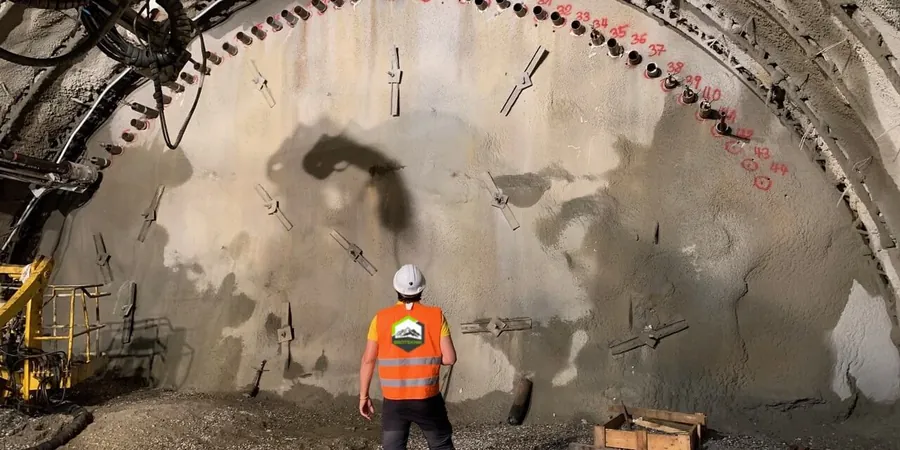
Technical reference image — Winnipeg

Local considerations

Winnipeg's soil profile is a classic Lake Agassiz sequence: stiff tan clay over soft grey clay over till. The transition zone around 8–12 meters depth packs a permeability contrast that traps groundwater. When you excavate through the upper crust into the softer layer, the base of the shoring loses passive resistance faster than the design charts predict. We've measured basal heave rates of 3 mm/day in unsupported cuts in the West End, where the artesian pressure in the underlying carbonate aquifer pushes upward through the till. Without a monitoring plan that includes heave pins and deep settlement markers, the first sign of trouble is usually the tower crane foundation tilting. The slope stability implications extend beyond the site fence: a 4-meter cut near a residential lot line in River Heights can unload the neighbor's footing and trigger a small rotational slide in the weathered clay crust.

Need a geotechnical assessment?

Reply within 24h.

Email: contact@geotechnicalengineering.vip

Technical parameters

ParameterTypical value
Inclinometer accuracy±0.25 mm/m (digital MEMS probe)
Piezometer range0–350 kPa (VW transducer)
Total station precision1 arc-second angular, 1 mm + 1.5 ppm EDM
Crack gauge resolution0.1 mm (manual) / 0.01 mm (LVDT)
Vibration thresholdPPV 5–12 mm/s per CSA S832
Data logging frequency15 min (real-time) to 24 h (manual survey)
Reporting formatDaily summary + exceedance alert via SMS/email

Associated technical services

01

Automated Real-Time Monitoring

Networked total stations with prisms on shoring and adjacent buildings, wireless tiltmeters on soldier piles, and vibrating wire piezometers logging to a cloud dashboard. Threshold exceedance triggers SMS alerts within 2 minutes.

02

Manual Survey & Instrumentation Reading

Weekly inclinometer traverses, optical survey of settlement monuments, and manual crack gauge readings with photographic records. Suited for low-risk cuts or as a backup verification layer alongside automated systems.

Applicable standards

ASTM D6230-21 (inclinometer monitoring), CSA S832-14 (seismic/vibration effects on buildings), City of Winnipeg Shoring Permit Guidelines (2023 ed.), NBCC 2020 Part 4 (excavation safety)

Frequently asked questions

What are the City of Winnipeg's requirements for excavation monitoring?

The City requires a shoring permit for excavations deeper than 3 meters, and the geotechnical engineer of record must specify a monitoring plan as part of the shoring design submission. For cuts near heritage buildings or within the downtown district, the planning department typically mandates baseline condition surveys of adjacent structures and monthly deflection reports. Vibration monitoring must follow CSA S832 guidelines when rock breaking or pile driving occurs within 50 meters of occupied buildings.

How much does geotechnical excavation monitoring cost in Winnipeg?

For a typical urban excavation project, expect monitoring services to range from CA$1,070 to CA$3,030 depending on duration, number of instruments, and reporting frequency. A 4-week monitoring program with weekly inclinometer readings and manual settlement surveys falls on the lower end. A 12-week program with automated total stations, wireless piezometers, and daily reporting reaches the upper range. Each quote is project-specific and includes instrument installation, calibration, data processing, and a final closure report.

What instruments do you install for a shored excavation in Lake Agassiz clay?

The standard suite includes slope inclinometer casings behind the shoring to track lateral deflection profile, vibrating wire piezometers to measure pore pressure response, and settlement monuments or heave pins at the excavation base. For cuts near sensitive structures, we add automated total station prisms, tiltmeters on the walers, and crack gauges on adjacent foundations. The instrument layout is designed to capture the failure mechanisms specific to Winnipeg's stiff-to-soft clay transition.

How often should excavation monitoring readings be taken?

During active excavation and shoring installation, inclinometers and survey points should be read daily. Once the final grade is reached and the permanent structure begins rising, the frequency drops to weekly. After a major rain event or vibration incident, we run an immediate full reading cycle. Automated systems log continuously and flag exceedances in real time. The City typically expects at least bi-weekly reports for the permit file.
Location and service area

We serve projects across Winnipeg and its metropolitan area.

View larger map