Geotechnical Engineering in Winnipeg

Together, we solve the challenges of tomorrow.

LEARN MORE →

Winnipeg's urban footprint grew along the Red and Assiniboine rivers, and that riverbank legacy still dictates how foundations behave today. The lacustrine clays beneath the city, deposited by glacial Lake Agassiz, create a geotechnical profile where a test pits investigation often reveals stiff crust over softer, compressible silt and clay. Builders working from Transcona to Charleswood encounter drastically different moisture conditions within the same project. A thorough soil mechanics study here isn't just a code requirement under the Manitoba Building Code; it's the only reliable way to predict long-term settlement and protect your investment from differential movement. Without site-specific data on consolidation and shear strength, even a standard footing can become an expensive repair within five years.

Lake Agassiz clays in Winnipeg can exhibit preconsolidation pressures that mask soft behavior until load exceeds historical ice weight, triggering sudden settlement.
Geotechnical Engineering in Winnipeg
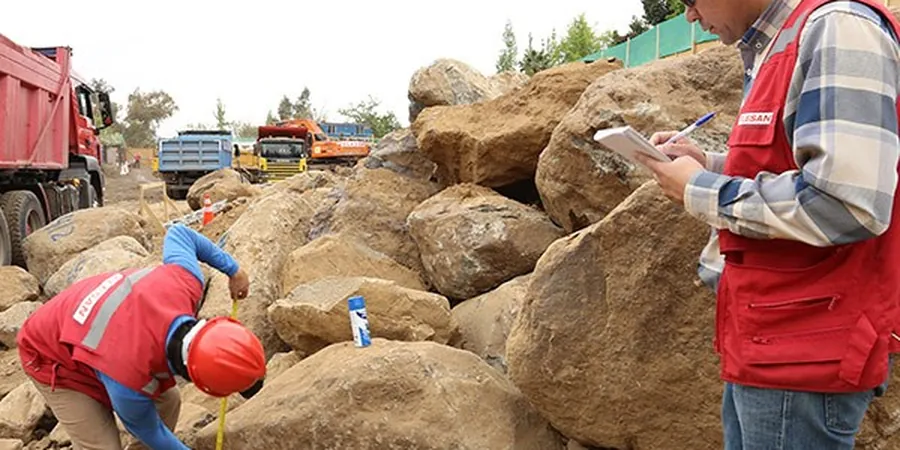
Technical reference image — Winnipeg

Methodology and scope

Contrast the dense, sandy tills found in parts of north Winnipeg near the airport with the high-plasticity clays typical south of the Assiniboine River. The former can offer excellent bearing capacity, while the latter often demands a deep excavations assessment if you're planning a basement deeper than two meters. A proper soil mechanics study quantifies these differences through laboratory testing of undisturbed Shelby tube samples. We measure undrained shear strength using triaxial compression tests and consolidation parameters via oedometer testing to calculate primary and secondary settlement. The data feeds directly into your structural engineer's foundation model, replacing generic assumptions with precise values for modulus of subgrade reaction, effective friction angle, and preconsolidation pressure. For sites with suspected organic layers, combining the mechanics study with atterberg limits helps identify expansive potential before excavation begins.

Local considerations

Winnipeg's freeze-thaw cycle reaches nearly two meters deep, creating a seasonal zone that can heave and shrink foundations if the bearing stratum isn't placed below the frost line. The humid continental climate brings rapid snowmelt in April, saturating the upper clay and temporarily reducing bearing capacity by as much as 40 percent in poorly drained lots. A soil mechanics study that ignores this seasonal fluctuation leaves the structure vulnerable to edge curling in slabs and stair-step cracking in masonry walls. The high water table along the Red River floodplain adds another layer of complexity: buoyancy forces on underground structures and increased lateral earth pressure against basement walls demand accurate unit weight and at-rest earth pressure coefficient data. Without it, your waterproofing and structural design are working from estimates, not engineered parameters.

Need a geotechnical assessment?

Reply within 24h.

Email: contact@geotechnicalengineering.vip

Explanatory video

Technical parameters

ParameterTypical value
Undrained Shear Strength (Su)25 – 75 kPa typical for clays
Preconsolidation Pressure (Pc)100 – 300 kPa in upper crust
Compression Index (Cc)0.15 – 0.45
Moisture Content20 – 60 % depending on depth
Effective Friction Angle (Φ')22° – 32° for silty clays
Coefficient of Consolidation (Cv)0.5 – 5 m²/year
Soil Classification (USCS)CL, CH, ML per ASTM D2487

Associated technical services

01

Consolidation & Settlement Analysis

Oedometer tests on undisturbed samples to predict total and differential settlement under your proposed footing loads, critical on Winnipeg's compressible clays.

02

Triaxial Shear Strength Testing

Consolidated-undrained and drained triaxial tests to define the failure envelope for bearing capacity and slope stability calculations.

03

Atterberg Limits & Soil Classification

Plasticity index and liquid limit determination to identify expansive potential and correlate with undrained strength for preliminary design.

04

Foundation Parameter Reports

A deliverable with modulus of subgrade reaction, allowable bearing pressure, and lateral earth pressure coefficients ready for your structural engineer.

Applicable standards

ASTM D4767 Triaxial Compression, ASTM D2435 One-Dimensional Consolidation, ASTM D2487 USCS Classification, Manitoba Building Code (MBC 2020), CSA A23.3 Concrete Structures

Frequently asked questions

What does a soil mechanics study in Winnipeg typically cost for a single-family home lot?

For a standard residential lot in Winnipeg, a comprehensive soil mechanics study including drilling, Shelby tube sampling, consolidation, and triaxial testing typically ranges from CA$4,280 to CA$8,040. The final cost depends on the number of boreholes, depth of investigation, and how many laboratory tests are required to characterize the Lake Agassiz clay profile on your specific site.

How deep should a soil mechanics investigation go for a basement foundation in Winnipeg?

The Manitoba Building Code generally requires investigation to a depth where the stress increase from the foundation is less than 10% of the existing overburden pressure. Practically, for a standard basement in Winnipeg's clay, this means boreholes extending 6 to 8 meters below grade, or deeper if a piled foundation is being considered to bypass the compressible zone.

What is the difference between a soil mechanics study and a simple soil report?

A simple soil report might only classify the soil visually. A full soil mechanics study quantifies engineering properties: consolidation parameters to predict settlement over time, triaxial shear strength for bearing capacity, and preconsolidation pressure to determine if the clay is normally consolidated or overconsolidated. This data is essential for modeling foundation behavior, not just describing soil type.

Can you perform a soil mechanics study in winter when the ground is frozen?

Winter drilling in Winnipeg is routine. We use truck-mounted drill rigs with hollow-stem augers that can penetrate frost up to two meters thick. The Shelby tube samples are collected from below the frozen crust, so the laboratory results on the underlying clay are unaffected by surface conditions. The main consideration is snow clearing for rig access and slightly longer field time compared to summer months.
Location and service area

We serve projects across Winnipeg and its metropolitan area.

View larger map